Showing posts with label games. Show all posts

The Surprising Calm That Comes From Solving a Puzzle

 It might not always be something that you think about doing, but solving puzzles offers an effective, calming, and meditative experience.


In a world where the digital domain rules and many spend a lot of their time on social media, it’s a great way to detox from this side of the digital sphere and enjoy a multitude of puzzles in both physical and digital formats.


By requiring focused attention on a singular task, puzzles provide the brain with the opportunity to enter a state of flow where worries can recede, and that ultimately provides a sense of accomplishment and order.


In this guide, we’ll look at how puzzles create a calming, therapeutic, and at times, for some, a euphoric experience for all generations.


Image Source

Neurochemistry of calm

Every time you get a puzzle done or complete a word search, the brain releases dopamine, which is a neurotransmitter associated with pleasure, satisfaction and motivation.


Finding a corner piece or getting the right letter on Wordle releases those small amounts of ‘feel-good’ chemicals that turn the puzzle into a rewarding and addictive experience. It reinforces the feelings of success and is a good way of delivering a sense of accomplishment and closure, improving mood and reducing anxiety.


There are a lot of neurological benefits going on when it comes to solving a puzzle, whether you’re playing Sudoku online or putting pieces together. Those small victories are great for improving your mood and helping you feel like you’ve achieved something for that day in particular.

A meditation effect

Solving a problem is a provide a sort of active meditation which encourages mindfulness and being fully present in the moment.


Puzzles put you in that flow state, where concentration is required to match shapes, colors and patterns. It’s a great way of being able to quiet a racing mind, stopping anxious and looping thoughts in their tracks.


There’s also a physical benefit and relaxation that comes with doing puzzles of any kind, too. That quiet and repetitive, tactical action of sorting and fitting pieces helps to lower heart rate, encourage deeper and more relaxed breathing, as well as being able to reduce cortisol levels.

A therapeutic escape and control

Puzzles help to simplify the world into a manageable, 2D challenge. It’s a form of escape from the hustle and bustle of life that can often get busy and overwhelming. Within the chaos of an unpredictable world, doing a puzzle offers a real sense of control and stability.


With puzzles, you’ve got a healthy, non-verbal and low-pressure way of processing emotions, which can be especially beneficial for those who are struggling with ADHD, depression or stress. 

The necessary digital detachment

Puzzles are a great way to digitally detach from social media or watching television. While there are plenty of these puzzle games around, the brain is still being stimulated productively, even when it’s through a screen.


Having that detach from social media can be a real need for everyone in this day and age. As humans, we’re not supposed to be able to consume so much media at the scroll of our finger, which is why it’s good to take some time away from it now and then.


Puzzles are a time-out for your brain, allowing you to unplug, unwind and recharge your brain without it feeling like an unproductive use of your time.

Benefits beyond calm 

There are several benefits that come from providing just a calm environment for puzzle players to enjoy.


Puzzles provide a sense of calm and offer long-term mental health benefits, too. For example, puzzles engage both sides of the brain, helping strengthen neural connections and also improving short-term memory.


Image Source


Regular and challenging puzzle-solving is great to maintain cognitive function, as well as reduce the risk of dementia or Alzheimer’. These are two diseases that can take away life in the cruellest of ways.

How to incorporate puzzles into your day-to-day life

Incorporating puzzles into your day-to-day life is incredibly important, and if you’re looking to maximize the opportunity, then here are a few ways that you can do that successfully.

  1. Create a puzzle ritual

Whether it’s a quick word search over breakfast or a game of solitaire during your morning commute, there are little puzzle rituals you can incorporate into your day that are quick and bite-sized.


Keep a puzzle app or book with you to do while having a coffee break or by your bedside as a way to wind down for the evening.

  1. Utilize micro-puzzling

Micro-puzzling is a good way to take some time out of your day for those much-needed active breaks. Boost your productivity whilst also clearing your mind while you play for 5-10 minutes every so often.


Download puzzle apps and daily word games to play while you’re waiting in a queue or during your local commute. There are also puzzles you can keep at your desk, too a a brain teaser or something to do when you’re struggling with a difficult task.

  1. Make it social

Who said that puzzles need to be something you do just on your own? A lot of puzzle enthusiasts have branched out into communities, setting up puzzle tables in common areas where family or coworkers can help out with a puzzle every so often.


Game nights are commonplace to in order to get together with friends or colleagues. From escape rooms to word puzzles, game nights can be a fun switch-up from just going to a random bar for the evening.


There are plenty of online communities available too, where you can share your own progress, play with others and compare scores.

  1. Strategic integration

There’s also a lot of strategic integration to enjoy when it comes to solving a puzzle. Set goals for yourself, whether it’s completing a mammoth 1,000-piece puzzle within a week or doing a Wordle puzzle every day.


Try to mix it up so that you’re trying new puzzles instead of doing the same ones over and over again, leading to boredom.


There are plenty of benefits that come from solving puzzles, so it’s certainly something to pick up where you can.


Smart and Fun: Online Card Games That Keep You Thinking


Casino cards on yellow background

Image Source

Looking for a screen-friendly way to stay sharp and unwind at the same time? Online card games offer a fun mix of strategy, focus, and mental exercise. Whether you're relaxing in the evening, taking a break during the day, or just looking for something new to enjoy, these games bring people together and challenge the mind in all the right ways.

Today’s online options go far beyond basic play—they are thoughtful, engaging, and often surprisingly rewarding. Let’s explore a few online card games that are both fun and brain-boosting.

Why Online Card Games Still Feel Special

Card games have always had a way of bringing people together. Whether it’s a quiet game after dinner or a friendly competition with loved ones, they’ve stood the test of time. Online platforms have taken that timeless format and made it even more accessible, offering a chance to play with others around the world—or just challenge yourself when you have a spare moment.

These games keep the heart of classic card play while adding new layers that make them fresh and mentally stimulating. Let’s take a look at a few favorites that balance fun with focus.

Blackjack: Simple Rules, Steady Thinking

Blackjack is one of the most popular card games in the world, and for good reason. It’s quick to learn but always keeps your brain engaged. The goal is to get as close to 21 as possible without going over—easy to understand, but with just enough strategy to keep you thinking.

Online versions of blackjack often move at a quicker pace, which can make the game feel lively without being overwhelming. If you enjoy games that reward consistency and clear decision-making, blackjack is a great choice.

Some players also enjoy taking things a step further with real-world stakes. In those cases, playing real money blackjack can offer a more focused, thoughtful version of the game—while still feeling accessible and grounded in simple rules.

Bridge: For Those Who Love to Plan Ahead

Bridge may not be as fast-paced as other games, but that’s part of its charm. It’s all about teamwork, communication, and long-term thinking. Playing bridge online gives you the chance to connect with others, learn strategies at your own pace, and build a sense of mastery over time.

With ranked play and guided tutorials, many online platforms now make it easier for beginners to get started. For those who enjoy deep strategy and working toward shared goals, bridge can be a rewarding way to challenge the mind.

Solitaire Variants: Classic Fun With a Twist

Solitaire has long been a go-to for quiet, solo fun. But online, it’s more than just moving cards around. Variants like Pyramid, TriPeaks, and Spider introduce new rules that gently encourage planning ahead, spotting patterns, and adapting on the fly.

These versions keep the spirit of traditional Solitaire but add just enough variation to feel fresh. They’re perfect when you want something peaceful yet mentally stimulating.

Spades and Hearts: Lighthearted but Strategic

Spades and Hearts are often favorites at family gatherings, and they translate beautifully to online play. These games are simple to pick up, but the more you play, the more depth you discover.

They offer a lovely balance of strategy and social play. Whether you're teaming up with a partner in Spades or trying to avoid points in Hearts, every hand feels different. Online platforms allow you to play at your own pace while still offering thoughtful gameplay that rewards planning and awareness.

Poker: A Game of Observation and Patience

While poker is often seen as a game of competition, it can also be a slow, deliberate exercise in reading situations. The most popular version, Texas Hold’em, blends luck and logic in a way that keeps things interesting.

Online poker doesn’t have to be intense. Casual tables and beginner-friendly games provide a relaxed space to learn the basics, practice decision-making, and explore the rhythm of the game. For those who enjoy observation and quiet focus, it offers a rewarding kind of challenge.

Rummy: Matching, Memory, and Momentum

Rummy is a fast and flexible game that builds on memory and pattern recognition. The objective is to form sets or runs before your opponent does. While the gameplay is simple, there’s always something to think about—what’s already been played, what you’ve collected, and what others might be saving.

Different types of Rummy, such as Gin or Indian Rummy, offer variations that keep things fresh. Online play adds a fun way to sharpen your memory and enjoy light competition in a relaxed setting.

Uno: Colorful, Chaotic, and Surprisingly Clever

Uno might seem like pure fun—and it is—but it also involves more strategy than you might expect. Managing your hand, keeping an eye on your opponents, and knowing when to play a special card all require a bit of forethought.

Online Uno games often come with playful rule sets and quick match options, making it a fun choice for a little friendly chaos. It’s a great way to bring people together, laugh a little, and stay alert.

Why Online Play Is Worth a Try

One of the best things about online card games is how flexible they are. You can play alone or with others, challenge yourself or keep it light. The platforms often offer helpful features like:

  • Hints or tutorials for learning new games,

  • Custom rules and game modes,

  • Play-anywhere access on mobile or desktop,

  • Stats and replays to track your progress.

It’s a gentle, low-pressure way to have fun while still giving your brain something to do.

Finding the Right Fit for You

There’s no one-size-fits-all answer when it comes to card games. Some people love the quiet focus of Solitaire. Others prefer the back-and-forth of Spades or the planning in Bridge. The beauty of online platforms is that you can try a little bit of everything, without any pressure.

Pick a game that matches your mood, your schedule, or just the kind of challenge you’re in the mood for. And if it helps you relax, focus, or even connect with others—then that’s time well spent.


7 Fun Activities Parents and Kids Can Do Together for Keeping Minds Sharp


Image credit


While boredom is okay sometimes for you and your kid, sometimes being entertained to the point it’s mind-numbing (like watching TV) is okay, too. But when it comes to activities, when you both have free time, it’s beneficial to try and do things that sharpen the mind, things that really just tease it! But what better way than to do things together? But what exactly? Well, here are some ideas you should definitely try together!

Exploring the Great Outdoors

First up, let’s talk about nature! There’s nothing quite like the great outdoors to stimulate our brains. It doesn’t matter too much what it is actually, it can be a hike through the woods, a walk in the park, or a day at the beach, being outside offers endless opportunities for mental engagement.

But how? Well, just think about it: when you’re out in nature, your senses are bombarded with new sights, sounds, and smells. This sensory overload forces your brain to process and adapt to the new environment, which is great for cognitive health. For the kids, it’s a chance to explore, ask questions, and learn about the world around them.

It depends on the age of your child, but ideally you should try turning your nature outings into mini-adventures. Maybe it’s a scavenger hunt where you look for different plants, animals, or insects. Or perhaps a simple game of I Spy. These activities are not only fun but also help sharpen observational skills and encourage curiosity. It’s mostly for them, but as a parent, it can still help you too.

Of course, your adventures can go a lot further than simply walking, biking, or hiking. If you want to explore nature in all of its beauty and to really experience the wilds together, camping is a great way to do it. Finding your local RV camps can help you experience all that nature has to offer, but still have enough creature comforts that it’s not taking your kids too far out of their comfort zone just yet.

Cooking Up a Storm

Who doesn’t love a good meal, right? For the most part, cooking with your kids can be a fantastic way to engage both their minds and yours. But how exactly can this help? Well, there are the measuring ingredients for following recipes, and cooking is a practical application of math and reading skills. Plus, it’s a great way to teach your kids about nutrition and healthy eating habits.

For the most part, if you’re cooking from scratch, it’ll be a good idea to involve your little ones in the entire process – from planning the meal to shopping for ingredients and finally, cooking. It helps create a good association with cooking, your brain needs to be active and it teaches them as well. You could even make it a fun challenge by trying out new recipes from different cuisines (ideal for getting them to be less picky with food).

Playing Video Games Together

Okay, so now, let’s talk about something that might surprise some of you – playing video games! Yup, you heard that right. Video games can be a fantastic way to keep both your mind and your kid’s mind sharp.

It really depends on the video game itself, but most games require strategic thinking, problem-solving, and quick decision-making. Even something like Mario Kart can be fairly stimulating to the mind. However, overall, most games often involve complex narratives and characters, which can improve memory and comprehension skills. Plus, playing together gives you a chance to bond with your kids over something they love.

Technically, you don’t always need to play games together, like the same game at the same time; you can even watch them play. For example, if you have a computer or even a tablet, you can watch them play games that they can play alone, such as Solitaire or a crossword puzzle, and just see how well they do (and in your mind, you can make moves or suggest moves).

Now, this is just an example, but overall, you need to choose games that are actually going to provide value to them and, of course, something age-appropriate too. The goal is for both of you to be entertained, but again, the game shouldn’t be mind-numbing; there needs to be some thought in the process, too.

You Can’t Go Wrong with Card and Tabletop Games

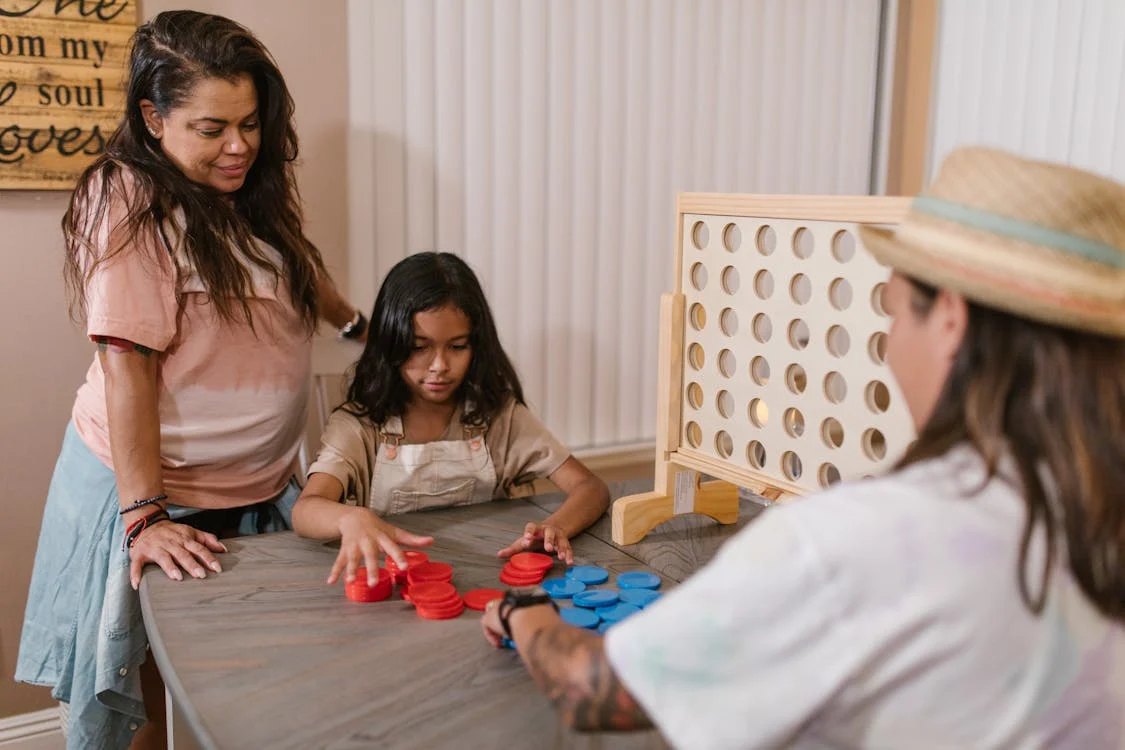
We went over video games above, but you just can’t beat the classics either! So, card games and tabletop games are timeless ways to engage your brain. Games like chess, checkers, Jenga, and Scrabble are fantastic for developing strategic thinking and vocabulary skills. Of course, you need to pick something that’s age-appropriate for your kid, but that shouldn’t be hard; for example, it’s pretty common to get preschool-aged children in Go Fish.

Getting Crafty with Arts and Crafts

It’s never a bad idea to get those creative juices flowing! Honestly, you can’t go wrong with this because arts and crafts are fantastic for engaging the brain and encouraging creativity. Basically, it can be painting, drawing, sculpting, or even simple coloring, these activities can be incredibly therapeutic and mentally stimulating.

Puzzles and Brain Teasers

Who doesn’t love a good puzzle? Puzzles and brain teasers are excellent for keeping our minds sharp. They challenge our problem-solving skills, improve memory, and enhance spatial reasoning. For kids, puzzles are a great way to develop cognitive skills in a fun and engaging way. For parents, they’re a wonderful way to relax and unwind while still giving your brain a workout. Plus, working on a puzzle together is a great bonding experience.

So video games were mentioned earlier, but there’s other types of puzzles you both can do together, technically Legos could be considered a puzzle, especially if you buy one of those comprehensive Legos like the Orient Express, Titanic, or basically anything else that’s more on a grand scale.

Reading Together

There’s something magical about getting lost in a good book. As you might already know, reading together is not only a wonderful way to bond but also a fantastic way to keep your minds sharp, it depends on the book itself, but for the most part, you can expect that this will improve vocabulary, comprehension, and critical thinking skills.

But ideally, it’s best to start making reading a part of your daily routine. This could be something like bedtime stories for the little ones or a family book club for the older kids, find books that everyone enjoys. If you want to try, you could even take turns reading aloud and discuss the stories together. Ask questions, make predictions, and dive deep into the characters and plot.